|
Has |
Did you come here from a link on another website? See page bottom for latest version of this page.
Skiing was originally winter transportation and even for hunting, for a downhill skier could outrun his quarry. For those who lived in snowy climates, the invention of skis may have seemed as important as did the discovery of the wheel and axle elsewhere. The earliest skis discovered are thousands of years old. Skis were invented in the Europe and Asia continent; in North America, early peoples used snowshoes for winter travel. (Curiously, when skis finally came to North America in the mid-1800s, they were at first called snowshoes or snow skates.) Both the European skis and the North American snow shoes gave more surface area underfoot to support the body's weight and keep persons using them from sinking into soft snow. With skis, however, the device could simply be slid forward while a snowshoe needed to be lifted to be moved forward. Still, each system had its merits, and both are still in use today. These early devices differed from modern alpine skis in that travelers' heels were free to rise with each stride as in a natural walking step. Such a setup is still used in modern cross-country, telemark, military, and mountaineering skis.
Just as now, early skiers used a pole or poles but their use was more for balance, to aid in pushing forward, and to create friction by dragging them in the snow to slow up. Surely these early skiers found they could slide down hills. But it appears to have been a very long time before they discovered how to turn skis while sliding. Logically, the very first turns could have been merely steps into a new direction, with multiple steps into the same direction to create greater turns, which we still do, too. What may have been the next generation of turns may have seemed more natural to those early skiers than do the ones we alpine skiers use today, for skiers of those earlier days first moved the outside hip forward of the turn-to-come, thrusting the corresponding ski along with it. (Today many skiers still find this move more natural than the one now used by virtually all advanced skiers who first move the inside hip and ski of the new turn forward, and for good mechanical reasons.) This early outside-hip forward turn came from the Telemark region of Norway. At another Norway area, another form of turning was soon invented in which, from a parallel ski position, the ski on the uphill side of the new turn was moved so its heel displaces uphill, called stemming, resulting in a skidded deflection against the snow that "pushes" the skier into a new direction. This turn came from the Christiania (now Oslo) area and so is called the stem christiania or stem christie. A more advanced turn can also be done without displacing the outside ski heel uphill and simply advancing the inside ski of the new turn while tipping the feet and body down the hill--the parallel christie. With modern skis we tilt our bodies a bit more down the hill, creating a higher angle of the ski's bases with the snow and minimizing or eliminating the skid, thus allowing the ski's designed geometry of shape to turn us-the carved turn. Sir Arnold Lunn, inventor of slalom ski racing, early 1900s. from
Skiing History, Sep-Oct 2014, p. 23
How much has skiing changed?
How much has the "Shaped Ski revolution" changed skiing.? Below is Phil Mahre from 1984, pre shaped-skis, looking much like skiers do today--legs apart, arms out and forward, torso angled against tipped legs, outside (right) knee bent inward, inside (left) knee flexed, skis turned more than torso, eyes up)--Ski, October 2008.
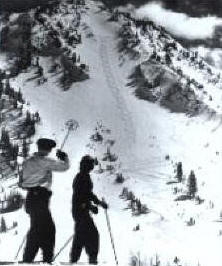
Powder 8s in 1947, photo by Clyde- Anderson, Skiing History, Sep-Oct 2014, p. 11
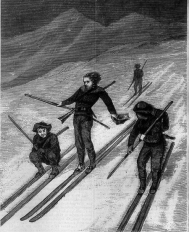
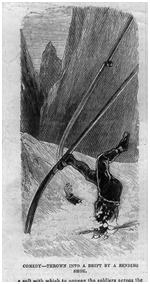
But skiing became a way to have fun early on, too. Witness this poem by a long-board skier from 1879 in the California gold camps (skis then were called snowshoes): The Snow-Shoe Races
illustrations from Frank Leslie's Illustrated
Newspaper
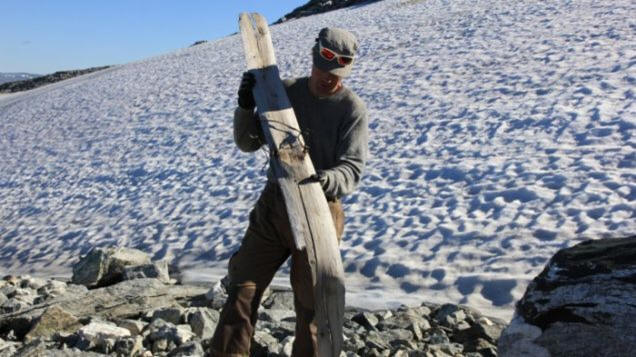
Archaeologists working in Norway have found a 1,300 year-old ski with the binding and leather straps still attached. The discovery, made possible because of melting ice, shows that Vikings were able to move fast and steady on the snow. It's one of only 20 pre-modern skis to be found in Norway, and only the second with bindings (the other being from Finland). Photo credit: Oppland County Authority.
|
|


 Certified
Professional Ski Instructor (Registration #110478), Level III
Certified
Professional Ski Instructor (Registration #110478), Level III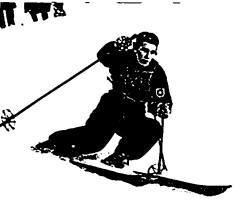
 0,
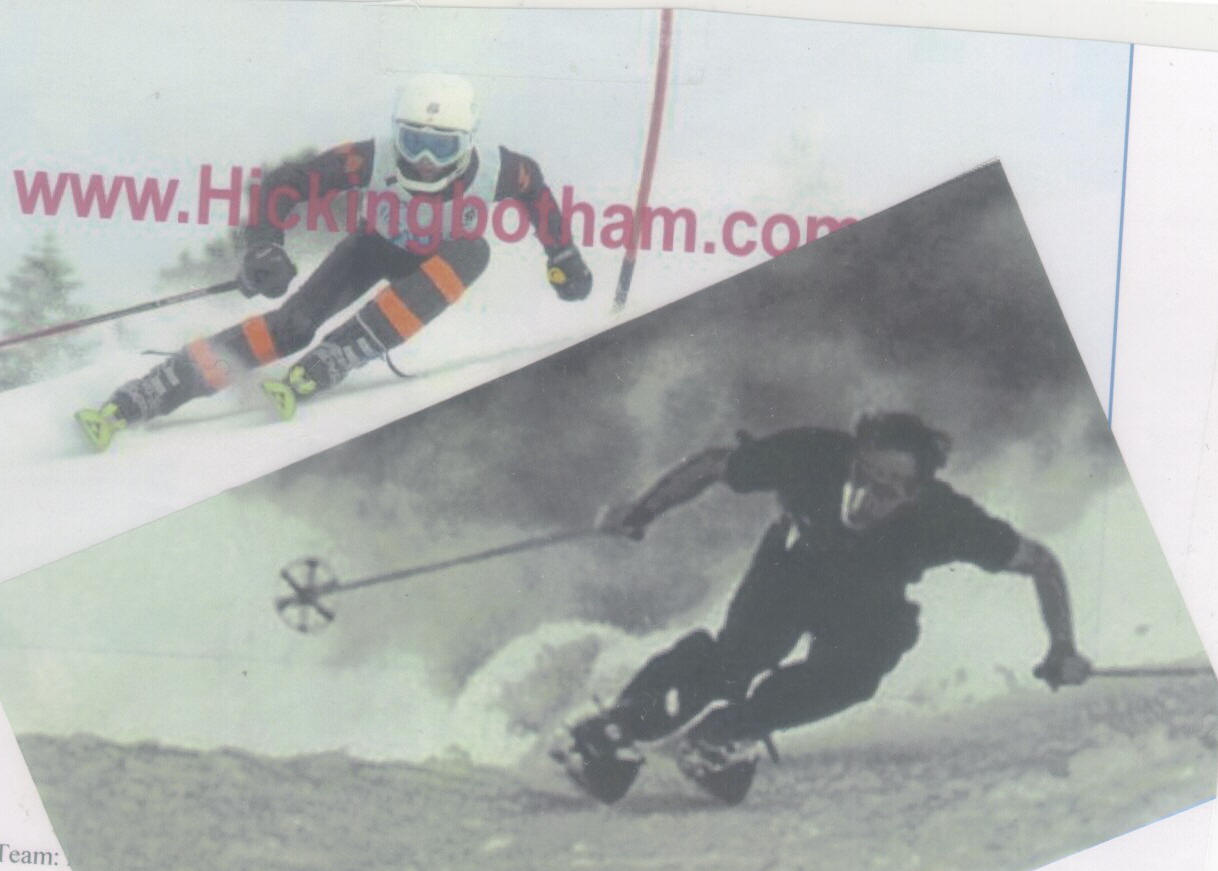
Dick Durrance; Right: 1974
0,
Dick Durrance; Right: 1974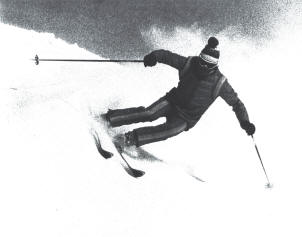 ,
Jim Bowden; also see Phil Mahre below.
,
Jim Bowden; also see Phil Mahre below.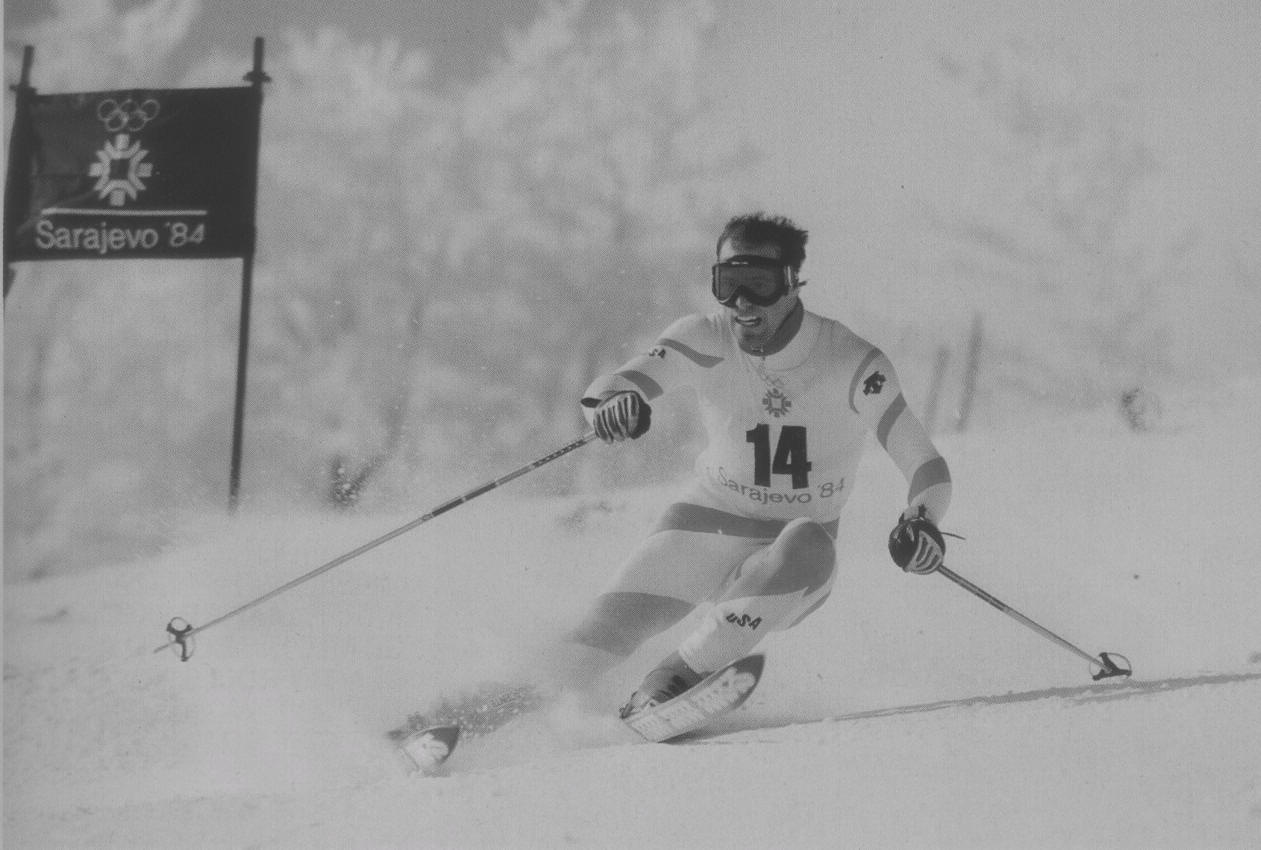
 Down
the mountain side, like birds in flight
Down
the mountain side, like birds in flight