|
Has
"Ski My Best" been of use? Help keep it going:

| |
Did you come here from a link on another website? See page bottom for latest version of this page.
This site is not associated with any ski area. Use of any page
means you accept the SkiMyBest Site
Use Agreement or
EXIT NOW.
SKI SLOPE RATINGS:
●GREEN
(circle) ■BLUE
(square)
♦BLACK
(diamond)
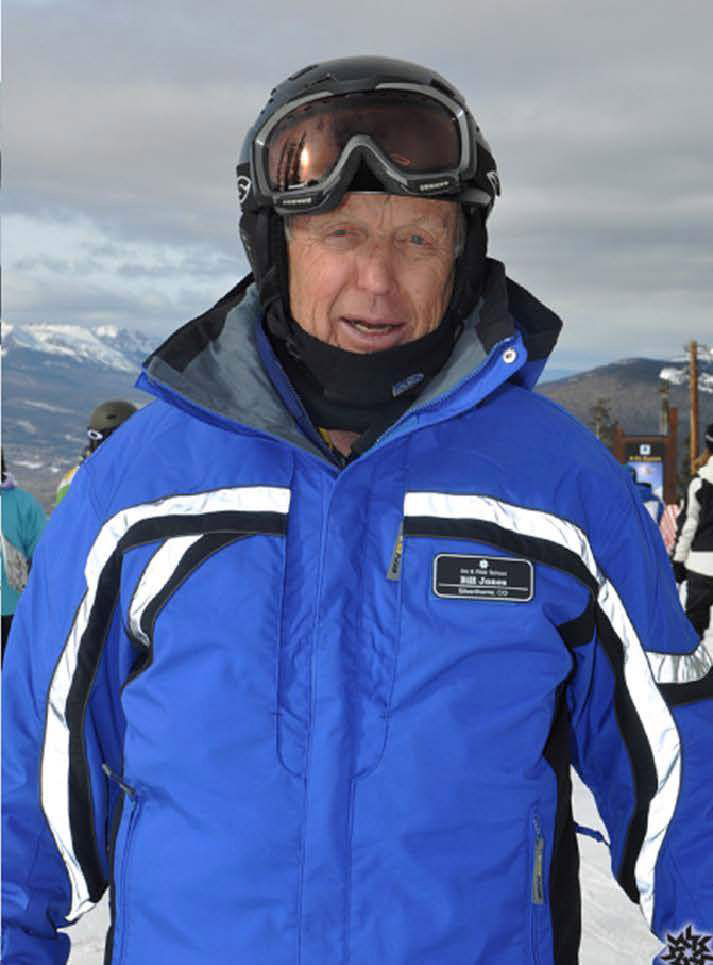
by Bill Jones,
Ski Instructor
Certified Professional Ski Instructor (Registration
#110478), Level III
Ski lessons involve not only teaching of maneuvers, but may also introduce equipment
selection, snow types, and slope and terrain variations. For instance, terrain for
alpine skiers at American ski areas is classified as
●"easiest"
(coded on signs and maps in green and/or as a green circle),
■
"more difficult" (coded on signs and maps in blue and/or as a blue square),
♦"most
difficult" (coded on signs and maps in black and/or as a black diamond)--and
, ,
, (!).
There is also a double-black diamond
¨¨, even a triple-black diamond
¨¨♦,
EX,
and sometimes a yellow exclamation point
(!), all self-explanatory. There may be a blue-black (a black diamond inside
a blue square), denoting a slope between blue and black gradients. Classifications
vary from ski area to ski area (they are relative only within a ski area, not among
areas). Overseas areas use a slightly different system. And another series of definitions
for rating terrain parks (where "pipes", rolls, jumps, rails, and the like are provided)
is being developed, although the green/blue/black colors may be used for these,
too. Snow conditions (icy, powdery, bumpy, etc.) and weather factors (sun/shade
areas, snowing, hot causing slush, etc.) as well as your daily psyche and physique
and how the slopes have been groomed by machines will alter slope difficulty at
any given time, although the rating signs normally will not be changed. Therefore,
the coding scheme is not absolute. Many ski areas post daily grooming reports, or
check with other skiers or the ski patrol to be sure what a slope is like. Or advance
your skill level to the point where the slope rating would rarely matter to you.
In a ski lesson, an instructor will attempt to match your skill level to the correct
slope for you taking into account current conditions.
Now see Skier Skill Levels 1-9.
This "Ski Slope Ratings" page last modified
September 10, 2026. Did you come here from a link on another website?
For latest version of this page, copy to your browser: http://www.SkiMyBest.com/skislope.htm. Copyright © 2013, 2014, 2015, 2016, 2017, 2018, 2019, 2020, 2021, 2022, 2023, 2024, 2025, 2026. William R Jones.
| |
|